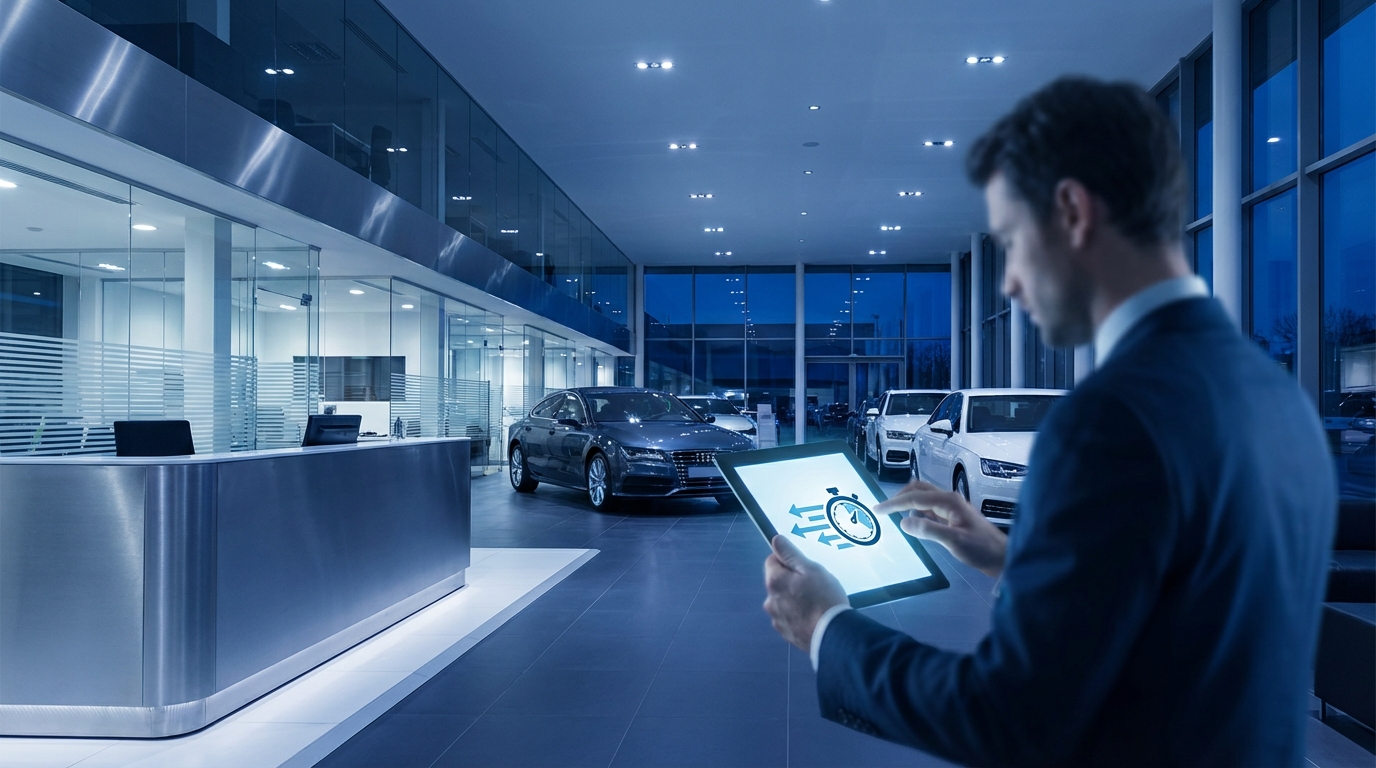
Why 5-Minute Lead Response Is Now Too Slow: The 60-Second Rule That Wins Car Sales
The Death of the 5-Minute Response Window
For years, the automotive industry held the 5-minute response rule as gospel. Industry studies showed that responding to leads within 5 minutes increased your odds of connecting by 9x compared to waiting 30 minutes. Dealerships built entire BDC operations around this benchmark, measuring success by how many leads got initial contact within that crucial 300-second window.
But customer expectations have shifted dramatically. In today's hyper-connected marketplace, 5 minutes feels like an eternity to a car shopper who just submitted their information. They've already moved on to the next dealership, checked three more vehicles online, and possibly even started conversations with your competitors.
The new reality? 60 seconds or less is becoming the standard that separates top-performing dealerships from those watching leads slip away. This isn't just about being faster—it's about meeting customers where their expectations now live.
What Changed: The Smartphone Shopping Revolution
Today's car buyers don't browse from desktop computers during business hours. They're scrolling through Facebook Marketplace at 11 PM, filling out contact forms during lunch breaks, and expecting immediate responses regardless of the hour. The average smartphone user checks their device 144 times per day—that's once every 6-7 minutes while awake.
When someone inquires about your 2022 Honda Civic, they're not just interested in that one vehicle. They're simultaneously evaluating similar inventory across multiple dealerships, comparing prices, and making split-second decisions about which dealer seems most responsive and professional.
The Data Behind 60-Second Response Times
Recent automotive CRM analytics reveal striking differences between dealerships that respond within 60 seconds versus those still operating on the 5-minute standard:
Connection rates: Dealerships responding within 60 seconds achieve 23% higher connection rates than those responding between 2-5 minutes. The difference becomes even more dramatic after hours—60-second responders see 31% better connection rates during evenings and weekends.
Appointment setting: Fast responders convert 18% more leads to appointments. Why? Because they catch customers while they're still actively shopping, before decision fatigue sets in or competing offers arrive.
Show rates: Perhaps most importantly, customers contacted within 60 seconds show up to appointments 14% more often. Quick response creates momentum that carries through the entire sales process.
The Compound Effect of Speed
These percentages compound throughout your sales funnel. A dealership that improves connection rates by 23%, appointment conversions by 18%, and show rates by 14% doesn't just sell 14% more cars—the cumulative effect often translates to 30-40% more closed deals from the same lead volume.
Consider the math on a typical month: If your dealership generates 200 internet leads monthly and currently closes 15% (30 sales), improving each stage of your response process could push your close rate to 21-22%—that's 42-44 sales from the same traffic. The difference between a 60-second response and a 5-minute response could literally be 12-14 additional car sales per month.
Why Humans Can't Hit the 60-Second Standard Consistently
Even the most dedicated BDC teams struggle to maintain 60-second response times across all leads, especially during peak hours, weekends, and after-hours periods. Here's why manual response systems fall short:
Peak Hour Chaos
Saturday afternoons generate 40% of weekly internet leads for most dealerships. Your BDC rep is simultaneously fielding phone calls, responding to Facebook messages, handling walk-in traffic, and trying to follow up on leads from earlier in the day. That "quick" 2-3 minute response starts feeling impossible when leads are arriving every 30 seconds.
After-Hours Reality
The highest-intent leads often arrive when your dealership is closed. Someone browsing cars at 10 PM on a Tuesday has genuine interest—they're not casually shopping during work hours. But they're also comparison shopping across multiple dealerships, and whoever responds first (even with an automated message) establishes immediate credibility.
Weekend Warriors
Weekend leads convert 22% better than weekday leads, but they also arrive when your staff is stretched thin handling lot traffic. The salesperson who's supposed to monitor internet leads is busy with a family shopping for an SUV, and meanwhile, three hot leads just came through the website.
AI Follow-Up Engine from Owini solves this coverage gap by responding to every lead within 3 seconds, 24/7/365. The system doesn't take breaks, doesn't get busy with other customers, and doesn't forget to check the lead inbox.
The Psychology of Instant Response
Fast response times trigger specific psychological responses that influence purchasing decisions. Understanding these mechanisms helps explain why 60-second response windows have become so critical:
Reciprocity Principle
When you respond quickly, customers feel obligated to engage back. A 60-second response signals respect for their time and genuine interest in their business. This creates a psychological debt—they're more likely to answer your call, respond to your text, or give you a chance to present your offer.
Authority and Competence
Speed implies organization and competence. A customer who receives an immediate, personalized response assumes your dealership runs efficiently across all operations—from service to financing to delivery. Slow responses suggest disorganization, which raises concerns about the entire buying experience.
Scarcity and Urgency
Quick responses reinforce that good deals don't last long. When you contact someone within 60 seconds of their inquiry, it suggests that vehicles move quickly and interested buyers need to act fast. This scarcity mindset accelerates decision-making.
Implementing 60-Second Response Systems
Achieving consistent 60-second response times requires systematic automation, not just faster human habits. The most successful dealerships combine AI-powered initial contact with intelligent handoffs to human sales teams.
Automated Initial Contact
The first response doesn't need to be a full conversation—it needs to acknowledge the customer immediately and begin the engagement process. AI Text Messaging can send personalized responses within seconds: "Hi Sarah, I see you're interested in our 2023 Toyota Camry. I'm checking availability and pricing details now. What's the best number to reach you in the next few minutes?"
This immediate acknowledgment accomplishes three things: confirms you received their inquiry, shows you're actively working on their request, and transitions them from anonymous lead to named prospect having a real conversation.
Intelligent Lead Routing
Not all 60-second responses need human involvement initially. AI can handle the first interaction, qualify basic information, and route hot leads to available sales reps while nurturing lukewarm prospects until human follow-up makes sense.
Speed-to-Lead Tracking helps identify which team members consistently hit response targets and which need additional support or different lead assignments. This visibility prevents leads from falling through cracks during shift changes or busy periods.
The Omnichannel Challenge
Modern car shoppers don't just fill out website contact forms. They send Facebook messages, Instagram DMs, Google Business Messages, texts, emails, and sometimes even WhatsApp messages. Monitoring six different communication channels for new leads makes 60-second response times nearly impossible without centralized systems.
Scattered Communication Kills Speed
Your salesperson might respond to website leads quickly but miss the Facebook message that arrived simultaneously. Or they see the Instagram DM two hours later because they don't check that platform regularly. Each communication channel requires separate monitoring, and leads slip through cracks during busy periods.
Omnichannel Inbox solves this by consolidating SMS, email, phone, Facebook Messenger, Instagram DM, WhatsApp, and Google Business Messages into one interface. Your team sees every lead regardless of communication channel, and AI responds across all platforms within seconds.
Platform-Specific Response Expectations
Different platforms create different response expectations. Facebook Marketplace shoppers expect immediate responses because they can see multiple similar vehicles from competing dealers in their feed. Instagram users are accustomed to brand responsiveness within minutes. WhatsApp users expect conversational, immediate engagement.
Meeting these varied expectations manually requires platform expertise and constant monitoring. AI systems can adapt response tone and speed to match platform norms while maintaining your dealership's voice across all channels.
Measuring Success Beyond Response Time
While 60-second response is the new standard, the ultimate goal is converting leads to sales. Fast response times should improve several downstream metrics:
Connection Rate Improvement
Track not just how fast you respond, but how often that quick response leads to actual conversation. A 60-second automated response that gets ignored doesn't help your sales numbers. Focus on response quality alongside response speed.
Appointment Conversion Tracking
Monitor how response speed affects appointment setting rates. You should see clear correlation between sub-60-second responses and higher appointment conversion—if not, your message content needs refinement.
Show Rate Analysis
Fast responders often see better appointment show rates because quick engagement creates momentum throughout the sales process. Track show rates by initial response time to validate that speed improvements translate to more customers on your lot.
Owini's KPI Scorecard tracks these metrics automatically, showing how response speed improvements impact your entire sales funnel. You can identify which salespeople benefit most from AI assistance and which leads require different engagement strategies.
Common Mistakes When Implementing Faster Response
Dealerships often make predictable errors when trying to achieve 60-second response times. Avoiding these mistakes accelerates your success:
Generic Automated Messages
"Thank you for your interest. Someone will contact you soon." These messages hit the 60-second target but provide zero value and often feel robotic. Effective automated responses reference specific vehicles, include relevant details, and ask qualifying questions that advance the conversation.
Overwhelming Customers with Multiple Contacts
Some dealerships panic about response time and have multiple team members contact the same lead through different channels. The customer receives a text, email, and phone call within minutes, creating an overwhelming experience that feels pushy rather than responsive.
Smart Pause/Resume prevents this by coordinating AI and human outreach. When a salesperson engages with a lead, AI automatically pauses its follow-up sequence. When the human conversation ends, AI can resume nurturing if needed.
Ignoring After-Hours Opportunities
Many dealerships implement 60-second response during business hours but revert to next-day follow-up for evening and weekend leads. This misses the highest-intent prospects who are actively shopping when your competitors are also closed.
Technology Stack for 60-Second Response
Achieving consistent 60-second response times requires integrated technology, not just faster processes. The most effective systems combine several capabilities:
Instant Lead Intake
ADF Lead Intake processes incoming leads immediately, regardless of source. Whether someone fills out your website form, sends a Facebook message, or responds to a Craigslist ad, the lead enters your system within seconds and triggers appropriate response workflows.
AI-Powered Initial Response
AI can craft personalized initial messages that reference specific vehicles, acknowledge customer preferences, and ask relevant qualifying questions. This isn't generic automation—it's intelligent engagement that feels human while operating at machine speed.
Real-Time Notifications
Real-Time Notifications alert available sales team members when high-priority leads arrive. Your top performers can claim hot leads immediately while AI handles initial contact for all other prospects.
Mobile-First Interface
Your sales team needs to respond from anywhere—on the lot with customers, at lunch, or during test drives. Mobile-optimized interfaces ensure that 60-second response is possible regardless of location or device.
ROI of 60-Second Response Implementation
Upgrading from 5-minute to 60-second response times requires technology investment, but the returns justify the cost for most dealerships:
Increased Sales Volume
Conservative estimates suggest 15-25% more sales from the same lead traffic when response times drop from 5 minutes to 60 seconds. For a dealership selling 100 cars monthly, that's 15-25 additional sales—easily justifying AI automation costs.
Improved Lead Conversion Rates
Better response times improve every stage of your sales funnel. Higher connection rates, more appointments set, better show rates, and stronger closing ratios compound into significantly better ROI from your marketing spend.
Reduced Marketing Costs
When you convert more of your existing leads, you need fewer total leads to hit sales targets. This can reduce your cost-per-acquisition from paid advertising, Facebook ads, and lead generation services.
Staff Productivity Gains
AI handling initial responses frees your sales team to focus on qualified prospects and customers ready to buy. Instead of spending time on initial contact attempts, they can concentrate on building relationships and closing deals.
The Future: Sub-30-Second Expectations
As AI adoption accelerates across industries, customer expectations for response speed will continue shrinking. E-commerce customers already expect instant chat responses, and this mindset is spreading to high-consideration purchases like vehicles.
Forward-thinking dealerships are already implementing sub-30-second response capabilities. AI Follow-Up Engine can respond within 3 seconds of lead receipt, setting a new standard that will become table stakes within the next two years.
The dealerships that adapt to these evolving expectations now will have significant competitive advantages as response speed becomes a primary differentiator in automotive retail.
Getting Started with 60-Second Response
Transitioning from traditional 5-minute response goals to 60-second standards doesn't require replacing your entire operation overnight. Start with high-priority leads and after-hours coverage:
Phase 1: After-Hours Automation
Implement AI response for leads arriving outside business hours. This immediately improves your worst response times and captures high-intent evening and weekend prospects.
Phase 2: Peak Hour Support
Add AI assistance during your busiest periods—typically Saturday afternoons and weekday evenings. This ensures consistent response times when lead volume overwhelms manual processes.
Phase 3: Full Integration
Expand AI response to all leads while maintaining human oversight for high-value prospects. This creates consistent 60-second response times across all traffic sources and time periods.
Owini's AI-powered platform handles this progression seamlessly, scaling from after-hours support to full lead management as your team adapts to faster response workflows.
The shift from 5-minute to 60-second response standards isn't just about keeping up with competition—it's about exceeding customer expectations when they're most engaged and ready to buy. Dealerships that make this transition now will capture more of their existing lead traffic while competitors struggle with outdated response benchmarks.
Frequently Asked Questions
How much does 60-second response improve sales compared to 5-minute response?
Based on recent automotive CRM data, dealerships achieving 60-second response times see 23% higher connection rates, 18% better appointment conversions, and 14% improved show rates compared to 5-minute responders. The compound effect typically results in 30-40% more closed deals from the same lead volume.
Can human sales teams realistically maintain 60-second response times?
Manual response systems struggle to consistently hit 60-second targets, especially during peak hours, weekends, and after-hours periods. Most successful dealerships combine AI-powered initial contact with intelligent handoffs to human sales teams. This ensures immediate acknowledgment while preserving personal relationships for qualified prospects.
What's the difference between automated response and AI response for car leads?
Traditional automated responses send generic "thank you" messages that provide no value. AI responses reference specific vehicles, include relevant details, ask qualifying questions, and adapt to different communication platforms. AI creates genuine engagement at machine speed, while basic automation often feels robotic and unhelpful.