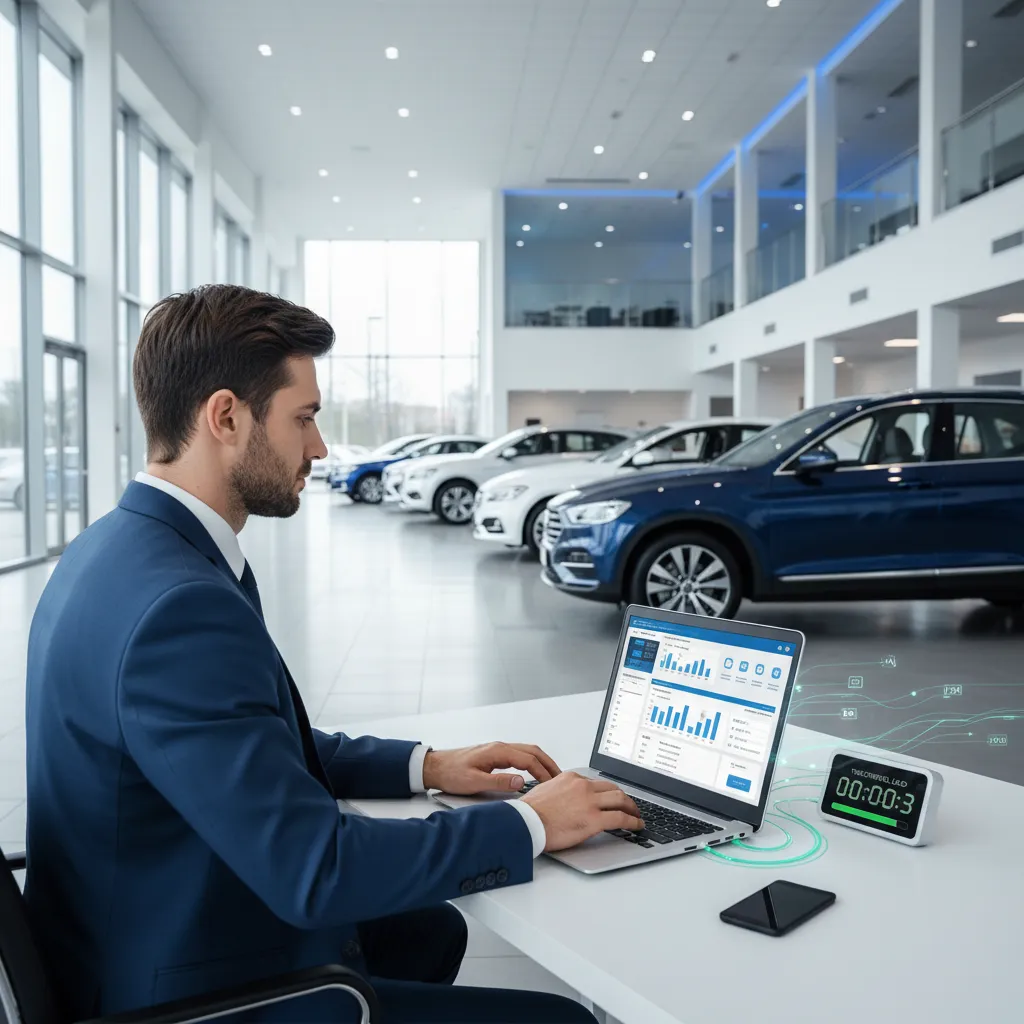
Speed-to-Lead: Why the First 5 Minutes Decide the Sale in Auto Dealerships
The Critical Window: Understanding Speed-to-Lead in Automotive Sales
In the fast-paced world of automotive sales, timing isn't just important—it's everything. The concept of speed-to-lead has become a cornerstone of successful dealership operations, with research consistently showing that speed-to-lead: why the first 5 minutes decide the sale isn't just a catchy phrase, but a fundamental truth that can make or break your monthly numbers.
Related: speed to lead statistics
When a potential customer submits a lead through your website, walks onto your lot, or calls your dealership, a timer starts ticking. This isn't just any timer—it's a countdown to opportunity or disappointment. Studies across multiple industries, including automotive retail, demonstrate that the likelihood of qualifying a lead decreases by over 400% when response time extends beyond five minutes.
For dealership owners and sales managers, this statistic should be both sobering and motivating. In an industry where average transaction values range from $20,000 to $60,000 or more, the cost of delayed response can be measured not just in lost individual sales, but in damaged lifetime customer value and reduced market share.
The Psychology Behind Speed-to-Lead: Why the First 5 Minutes Matter
Understanding why speed-to-lead matters requires diving into consumer psychology, particularly in the automotive purchase journey. When customers express interest in a vehicle—whether through an online inquiry, phone call, or in-person visit—they're typically in what behavioral economists call a "high-intent state."
The Modern Car Buyer's Mindset
Today's automotive consumers are different from buyers of previous generations. They're more informed, having conducted extensive online research before ever contacting a dealership. By the time they reach out, they've likely:
Researched multiple vehicle options
Compared pricing across dealerships
Read reviews and specifications
Narrowed their choices to 2-3 serious options
Developed a timeline for purchase
This research-heavy approach means that when they finally submit a lead, they're often ready to move quickly. Their expectations for responsiveness have been shaped by experiences with other industries—from instant online shopping confirmations to immediate ride-share pickups.
The Attention Economy Challenge
In our hyper-connected world, attention is a finite resource. When a potential customer submits an inquiry, they're giving you their attention in that moment. However, this attention is fragile and easily diverted. Within minutes of submitting a lead, they might:
Continue browsing other dealership websites
Receive responses from competitors
Get distracted by other priorities
Second-guess their initial interest
Move on to entirely different activities
This reality underscores why speed-to-lead: why the first 5 minutes decide the sale has become such a critical metric for successful dealerships.
Owini's AI-powered CRM recognizes this challenge and provides automated response capabilities that ensure no lead goes unacknowledged during those crucial first minutes.
The Data Behind Speed-to-Lead Performance
Multiple studies have quantified the impact of response speed on lead conversion rates, and the numbers are compelling for automotive dealerships willing to prioritize rapid response systems.
Industry-Wide Response Time Statistics
Research from the automotive industry reveals sobering truths about current response times:
Average dealership response time to online leads: 47 minutes
Percentage of dealerships responding within 5 minutes: Less than 18%
Lead qualification rates for sub-5-minute responses: 391% higher than responses after 30 minutes
Conversion rates decrease by 80% when response time exceeds 5 minutes
These statistics highlight a significant opportunity gap in the automotive retail space. While most dealerships understand that speed matters, few have implemented systems capable of consistently achieving rapid response times.
Revenue Impact Analysis
The financial implications of improved speed-to-lead performance extend far beyond individual transactions. Consider a typical mid-size dealership scenario:
Monthly online leads: 200
Current conversion rate (47-minute average response): 8%
Potential conversion rate (sub-5-minute response): 24%
Average gross profit per sale: $3,500
In this example, improving speed-to-lead from industry average to best-in-class would result in an additional 32 sales per month, generating over $1.1 million in additional annual gross profit.
Technology Solutions for Speed-to-Lead Excellence
Achieving consistent sub-5-minute response times requires more than good intentions—it demands robust technological infrastructure and automated systems that can operate 24/7.
AI-Powered Response Automation
Modern CRM systems, particularly those designed specifically for automotive dealerships, leverage artificial intelligence to ensure immediate lead acknowledgment and qualification. These systems can:
Send personalized responses within seconds of lead submission
Qualify leads through automated questionnaires
Schedule appointments directly through calendar integration
Route high-priority leads to available sales representatives
Maintain engagement through follow-up sequences
The Owini platform exemplifies this approach, combining AI-powered automation with human oversight to ensure that speed doesn't come at the expense of personalization or quality.
Chrome Extension Integration
For sales teams that spend significant time browsing inventory, researching trade values, or managing online presence, Chrome extensions can provide seamless CRM integration without requiring constant platform switching. This integration ensures that lead notifications and response capabilities are always accessible, regardless of current browser activity.
Implementing Speed-to-Lead Best Practices
Creating a culture of rapid response requires more than just technology—it demands organizational commitment and systematic process improvement.
Staff Training and Accountability
Sales team members must understand not just the importance of speed-to-lead, but also the specific techniques that make rapid responses effective. This includes:
Lead qualification questioning techniques
Appointment setting strategies
Follow-up sequence management
Customer expectation management
Technology platform proficiency
Regular training sessions should reinforce these skills while also introducing new features and capabilities as CRM platforms evolve.
Ready to transform your dealership's speed-to-lead performance? Discover how Owini's AI-powered CRM can help you respond to leads in under 60 seconds while maintaining personalization and quality.
Performance Monitoring and Optimization
Successful speed-to-lead programs require continuous monitoring and refinement. Key performance indicators should include:
Average response time by lead source
Response time by individual sales representative
Conversion rates correlated with response speed
Customer satisfaction scores for rapid vs. delayed responses
Revenue attribution to speed-to-lead improvements
Overcoming Common Speed-to-Lead Challenges
While the benefits of rapid lead response are clear, many dealerships face practical challenges in implementation. Understanding these obstacles and developing solutions is crucial for sustained improvement.
Staffing and Coverage Challenges
Traditional dealership operations often struggle with consistent coverage, particularly during:
Evening and weekend hours
Peak traffic periods
Staff vacation or illness
Training periods for new employees
High-volume lead generation campaigns
AI-powered CRM systems address these challenges by providing consistent automated responses while human staff focus on high-value activities like appointment setting and closing.
Lead Quality vs. Response Speed Balance
Some dealerships worry that prioritizing speed might compromise response quality or lead to generic, impersonal communications. However, modern CRM platforms can deliver both speed and personalization through:
Dynamic content based on lead source and vehicle interest
Behavioral trigger sequences
Inventory-specific messaging
Geographic and demographic personalization
Previous interaction history integration
The Competitive Advantage of Superior Speed-to-Lead
In markets where multiple dealerships compete for the same customers, speed-to-lead performance can become a significant differentiator. This advantage compounds over time as satisfied customers become repeat buyers and referral sources.
Market Share Implications
Dealerships that consistently outperform competitors on response speed often see benefits beyond immediate sales conversion:
Improved online reviews and reputation
Higher customer lifetime value
Increased referral rates
Better manufacturer satisfaction scores
Enhanced employee morale and retention
These secondary benefits create a positive feedback loop that strengthens market position over time.
Building Customer Loyalty Through Responsiveness
Fast response times communicate respect for customer time and serious commitment to service. This initial positive impression often influences the entire customer relationship, leading to:
Higher customer satisfaction scores
Increased likelihood of completing the purchase
Better service department retention
More positive word-of-mouth marketing
Higher probability of future purchases
Measuring and Tracking Speed-to-Lead Success
Effective measurement requires both real-time monitoring capabilities and comprehensive reporting that connects response speed to business outcomes.
Essential Metrics and KPIs
Successful speed-to-lead programs track multiple interconnected metrics:
Response Time Metrics: Average, median, and 95th percentile response times
Conversion Metrics: Lead-to-appointment and appointment-to-sale ratios
Revenue Metrics: Revenue per lead and gross profit attribution
Quality Metrics: Customer satisfaction and Net Promoter Scores
Operational Metrics: Staff utilization and system uptime
Reporting and Analysis
Regular reporting should provide both tactical insights for daily operations and strategic analysis for long-term planning. This includes identifying:
Peak lead volume periods requiring additional staffing
Lead sources with highest conversion potential
Individual performance coaching opportunities
System or process improvements needed
ROI analysis for speed-to-lead investments
Future Trends in Automotive Speed-to-Lead
The automotive industry continues evolving, with new technologies and changing consumer expectations driving innovation in lead response strategies.
Emerging Technologies
Several technological developments promise to further improve speed-to-lead capabilities:
Advanced AI and Machine Learning: More sophisticated lead scoring and response personalization
Voice Technology Integration: Automated phone response and qualification
Video Communication: Instant video responses for complex inquiries
Mobile-First Platforms: Seamless smartphone-based lead management
Integration APIs: Better connection between lead sources and CRM systems
Changing Consumer Expectations
As consumers become accustomed to instant digital experiences, their expectations for dealership responsiveness will likely increase. Forward-thinking dealerships are already adapting to these evolving expectations by implementing increasingly sophisticated response systems.
Don't let your competition gain the speed-to-lead advantage. Schedule a demo with Owini today and discover how our AI-powered CRM can help you capture more leads, close more sales, and build lasting customer relationships.
Conclusion: Making Speed-to-Lead Your Competitive Advantage
The evidence is overwhelming: speed-to-lead: why the first 5 minutes decide the sale isn't just a marketing slogan—it's a fundamental principle that separates successful dealerships from their struggling competitors. In an industry where customer acquisition costs continue rising and competition intensifies, the ability to respond rapidly and effectively to potential customers becomes increasingly valuable.
Implementing superior speed-to-lead capabilities requires commitment across multiple areas: technology investment, staff training, process optimization, and cultural change. However, dealerships that make this investment consistently see returns that far exceed the initial costs, both in immediate sales improvements and long-term competitive positioning.
The first five minutes after a customer expresses interest truly do decide the sale more often than not. The question for dealership owners and managers isn't whether to prioritize speed-to-lead, but how quickly they can implement systems and processes that ensure they never miss another opportunity due to slow response times.
As the automotive industry continues evolving, with electric vehicles, changing financing options, and new customer expectations reshaping the landscape, the fundamentals of excellent customer service—including rapid, professional response to inquiries—remain constant. Dealerships that master these fundamentals while embracing technological innovation will find themselves well-positioned for sustained success in an increasingly competitive marketplace.