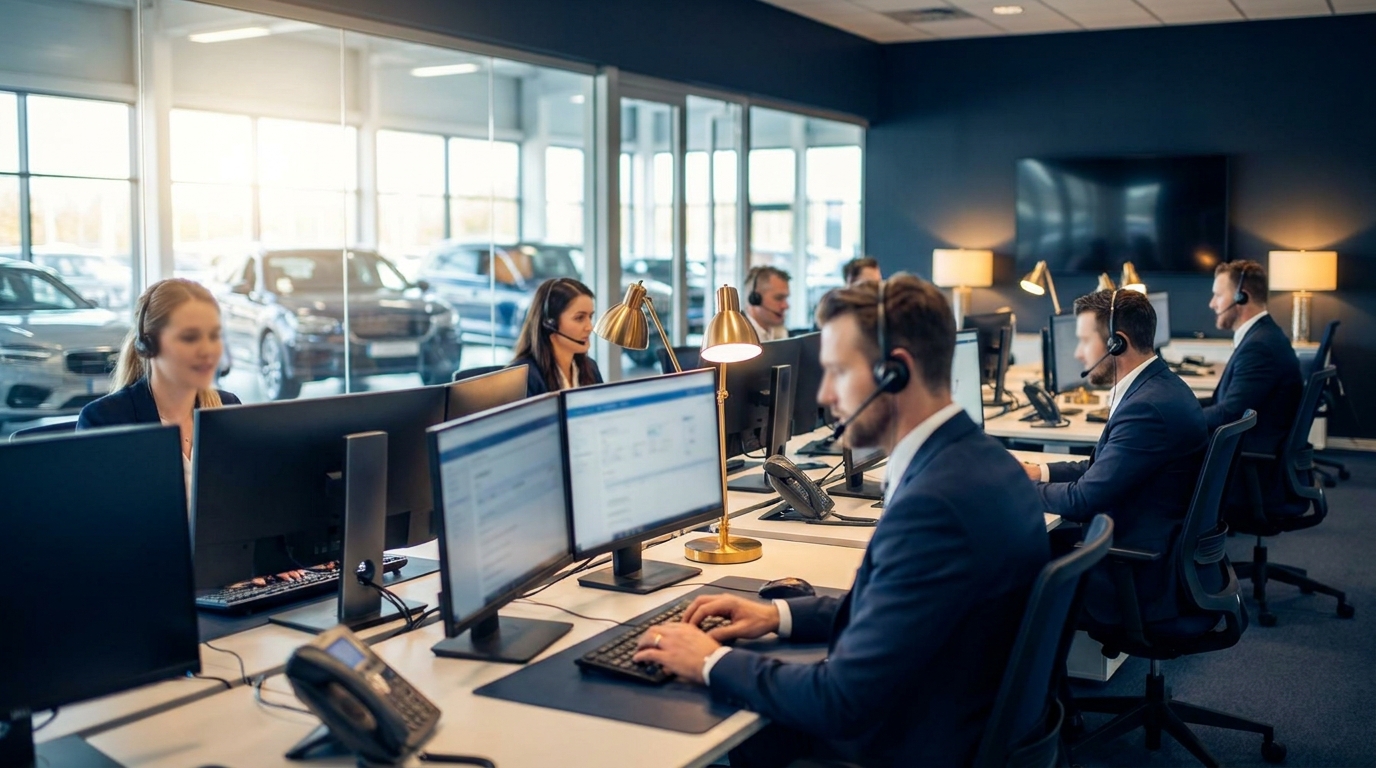
Automotive BDC Best Practices: The Complete Playbook for Dealership Sales Teams in 2026
Automotive BDC Best Practices Start With One Question: How Fast Are You Responding?
Your dealership's Business Development Center exists for one reason — to turn leads into appointments that turn into sold cars. But in 2026, the gap between BDC departments that perform and those that hemorrhage opportunities has never been wider. The difference isn't headcount. It's not fancy phone systems or better coffee in the BDC room. It's process.
Automotive BDC best practices have evolved dramatically. What worked in 2020 — calling every internet lead three times in the first 24 hours — now feels glacial. Buyers expect immediate, personalized responses across every channel. They're texting your dealership from Autotrader at 10:47 PM on a Tuesday, and if nobody responds until your BDC rep clocks in at 8 AM Wednesday, that lead already has an appointment at your competitor down the road.
This guide breaks down every BDC best practice that actually moves metal in 2026 — from response time benchmarks and script frameworks to staffing models, technology requirements, and the specific moments where AI outperforms humans (and vice versa). Whether you're building a BDC from scratch, overhauling an underperforming team, or deciding whether to go fully virtual with AI-powered BDC automation, this playbook covers it all.
What a Dealership BDC Actually Does (And Where Most Fall Short)
A BDC handles the critical space between lead creation and showroom visit. Your BDC reps field inbound calls, respond to internet leads from third-party sites (Autotrader, Cars.com, CarGurus, Facebook Marketplace), manage email and text follow-up, and ultimately book appointments for your sales team.
That's the theory. In practice, most dealership BDCs are overwhelmed, understaffed, and reactive. Here's where the breakdowns happen:
The Lead Graveyard Problem
The average dealership receives 300–600 internet leads per month. A BDC team of 3–4 reps can realistically handle 400–500 meaningful touches per day across phone, text, and email. The math doesn't work. Leads that arrive after 5 PM Friday don't get touched until Monday. Leads that come in during a Saturday rush get buried. A comprehensive study of lead response times shows the average dealership takes over 2 hours to respond to an internet lead — and 25% never respond at all.
Channel Fragmentation
Your leads aren't just emailing anymore. They're texting, calling, submitting forms, messaging on Facebook, DMing on Instagram, and chatting through Google Business Messages. A BDC rep toggling between 6 platforms doesn't have time to craft thoughtful responses. Messages fall through cracks. Conversations get lost. Customers repeat themselves to different reps and lose patience.
Script Fatigue and Robotic Delivery
BDC reps reading from a rigid script sound like BDC reps reading from a rigid script. Customers know it instantly. The best BDC teams use scripts as frameworks — not word-for-word recitations. But maintaining that balance requires ongoing coaching, which most sales managers don't have bandwidth to deliver consistently.
BDC Response Time Benchmarks Every Dealer Should Know in 2026
Response time is the single most predictive metric for BDC success. It's not opinion — it's data. Here are the benchmarks your dealership should measure against:
- Under 60 seconds: Gold standard. Leads contacted within 60 seconds are 391% more likely to convert than those contacted after 1 minute. This is where the 60-second rule becomes non-negotiable.
- 1–5 minutes: Acceptable, but you're already losing ground. Contact rates drop 10x between minute 1 and minute 5.
- 5–30 minutes: Below average. You're competing against dealers who responded instantly.
- 30+ minutes: That lead is gone. Studies show that after 30 minutes, the odds of qualifying a lead drop by 21x compared to a 5-minute response.
The uncomfortable truth: no human BDC team can consistently hit sub-60-second response times across every channel, every hour, every day. Even the best-staffed BDC has shift changes, lunch breaks, bathroom breaks, and Saturday rushes that create gaps. This is precisely why Speed-to-Lead Tracking — measuring individual rep response times in real time — separates high-performing BDCs from mediocre ones.
Owini's dealership CRM includes a built-in Speed-to-Lead leaderboard that tracks exactly how long each rep takes to respond to every lead, across every channel. When your team knows they're being measured, response times drop. When they can see their ranking against peers, competitiveness kicks in.
How to Set Up a Dealership BDC: Structure, Staffing, and KPIs
If you're building or restructuring a BDC, these are the foundational decisions that determine success or failure.
Centralized vs. Decentralized
A centralized BDC handles all lead response in a dedicated department — separate from the sales floor. Reps specialize in appointment setting. A decentralized model distributes internet leads directly to salespeople, who handle their own follow-up alongside floor traffic.
For dealerships with 5+ salespeople, centralized wins. Salespeople on the floor get pulled in too many directions. A dedicated BDC ensures every lead gets consistent, timely follow-up. For smaller operations with 2–3 reps, a hybrid model — where AI handles the first touch and salespeople take over for qualified conversations — often delivers the best ROI.
Staffing Ratios That Work
The industry standard is 1 BDC rep per 100–150 leads per month. But this assumes reps are only handling internet leads. If your BDC also fields inbound service calls, manages chat, and handles social media inquiries, you need closer to 1 rep per 75 leads.
Here's a practical staffing framework:
- Small dealership (100–200 leads/month): 1–2 BDC reps + AI handling after-hours and overflow
- Mid-size dealership (200–500 leads/month): 3–5 BDC reps + BDC manager + AI for instant first response
- Large dealership (500+ leads/month): 6–10 reps, split into phone/digital teams, BDC director, AI augmentation across all channels
The KPIs That Actually Matter
Track these metrics daily, report weekly, review monthly:
- Speed-to-lead: Average time from lead creation to first meaningful contact (target: under 2 minutes)
- Contact rate: Percentage of leads your team actually reaches (target: 60–70%)
- Appointment set rate: Percentage of contacted leads that book appointments (target: 25–35%)
- Appointment show rate: Percentage of set appointments that actually walk in (target: 60–70%)
- Lead-to-sale conversion: Percentage of total leads that result in a sold unit (target: 8–12%)
- Touches per lead: Number of contact attempts before a lead is dispositioned (target: 8–12 over 30 days)
If you're not tracking all six, you're guessing. Owini's KPI Scorecard and Pipeline Overview give your BDC manager real-time visibility into every one of these metrics — per rep, per lead source, per time period.
BDC Scripts for Car Dealers: Frameworks That Convert (Not Robots That Repel)
The word "script" makes experienced BDC managers cringe — and for good reason. Rigid scripts produce rigid conversations. But no scripts at all produce inconsistency, missed objections, and reps who talk themselves out of appointments.
The solution is script frameworks — structured outlines that ensure every conversation hits the right beats while leaving room for natural conversation. Here are the essential frameworks your BDC team needs:
Initial Internet Lead Response (Phone)
Goal: Acknowledge the specific vehicle of interest, build rapport, secure appointment.
Framework:
- Personalize immediately: "Hi [Name], this is [Rep] from [Dealership]. I saw you were looking at our [Year Make Model] — great choice."
- Confirm interest and add value: "That one's been getting a lot of attention. I wanted to reach out personally to let you know it's still available and answer any questions."
- Assumptive close to appointment: "Would this afternoon or tomorrow morning work better for you to come take a look?"
- Handle objections with empathy: Address price, trade, credit concerns without getting defensive.
- Lock the appointment with specifics: Confirm date, time, and ask for email to send a confirmation with directions.
Notice what's not here: no reading of vehicle specifications they already saw online. No asking "What can I help you with today?" (they told you — they want that car). No pressure tactics.
Initial Internet Lead Response (Text/SMS)
Texting is now the preferred communication method for 75% of car buyers under 45. Your first text needs to be fast, short, and specific.
Framework:
"Hi [Name]! This is [Rep] at [Dealership]. I saw your interest in our [Year Make Model]. It's available — would you like to schedule a time to see it? I can have it pulled up front and ready for you."
That's it. Under 160 characters if possible. No links, no fluff, no "How can I help you today?" Direct, specific, action-oriented.
For dealerships using Owini's AI Text Messaging, this first response fires automatically within 3 seconds of lead submission — personalized with the vehicle of interest, dealership-specific language, and a natural conversational tone. The AI continues the conversation, answers questions, and books the appointment. If the lead asks something complex, Smart Pause/Resume seamlessly hands the conversation to a human rep without the customer ever knowing AI was involved.
Follow-Up Sequence (Days 1–7)
Most BDC teams give up too early. Research on follow-up sequences shows that 80% of sales require 5–12 follow-up touches, but the average BDC rep stops after 2. Here's a 7-day multi-channel framework:
- Day 1: Immediate text (AI or rep) + phone call within 5 minutes + email with vehicle details
- Day 1 (evening): Second text if no response — different angle ("Still thinking about the [Vehicle]? Happy to answer any questions")
- Day 2: Phone call (different time of day than Day 1) + voicemail drop
- Day 3: Text with value add (price positioning, similar inventory, financing highlight)
- Day 4: Email with comparison or additional photos
- Day 5: Phone attempt #3
- Day 7: "Last chance" text with urgency (other interested buyers, limited availability)
Owini's AI Follow-Up Engine automates this entire sequence — adjusting timing, channel, and messaging based on how (and whether) the lead responds. No manual task creation. No leads falling through cracks because a rep called in sick on Day 3.
Omnichannel Inbox: The BDC Tool Most Dealerships Don't Have (But Desperately Need)
Your customers are reaching you through SMS, email, phone calls, Facebook Messenger, Instagram DMs, Google Business Messages, and website chat. Your BDC reps are bouncing between 6+ tabs, losing context, missing messages, and accidentally ignoring leads on platforms they forgot to check.
An omnichannel inbox consolidates every customer conversation — regardless of channel — into a single, unified thread. When a customer texts you on Monday, emails on Tuesday, and calls on Thursday, your BDC rep sees the complete conversation history in one place.
This isn't a nice-to-have. It's the difference between a customer hearing "Let me look up your information" and "I see you asked about the Camry's warranty on Tuesday — great news, I have that answer for you."
Owini's omnichannel inbox pulls SMS, email, phone, Facebook Messenger, Instagram DM, WhatsApp, and Google Business Messages into a single view. Every rep sees the full conversation history. Every customer feels remembered. And every lead gets followed up — regardless of which channel they chose.
Ready to see what a modern BDC workflow looks like? Check out Owini's pricing and see how an AI-powered CRM handles what your BDC team struggles with every day.
Automotive BDC Best Practices for Drip Campaigns and Long-Term Follow-Up
Not every lead is ready to buy today. Some are 30 days out. Some are 90 days out. Some submitted a form six months ago and are just now ready to pull the trigger. The dealerships that win these long-cycle buyers are the ones with automated drip campaigns running in the background — consistently, perpetually, without human intervention.
Lead Reactivation Campaigns
Your CRM is full of leads that went cold 60, 90, or 120 days ago. Most dealerships treat these as dead. They're not dead — they just weren't ready. A well-structured reactivation drip re-engages these leads with new inventory, price drops, and seasonal promotions.
Owini includes 21 pre-built drip campaign templates for sales, service, and reactivation. Lead Reactivation and Sold Reactivation sequences auto-enroll from CRM events — no manual list building, no CSV exports, no forgetting to start the campaign. They run on recurring loops with configurable cooldown periods, creating a perpetual follow-up machine that resurfaces opportunities your team forgot existed.
Price Drop Automation
When your used car manager drops the price on a vehicle that's been sitting for 45 days, who tells the 12 people that previously showed interest? In most dealerships, nobody. The price change happens in the DMS, maybe gets updated on the website, and that's it.
Owini's Price Drop Automation automatically sends a text and email to every previous prospect who inquired about that vehicle — the moment the price changes. "Hi Sarah, the 2023 Accord you were looking at just dropped to $24,900 — want to come take another look?" No rep had to remember. No manager had to pull a list. It just happens.
This is the kind of feature that no other dealer CRM offers — and it directly re-engages warm leads at the exact moment they're most likely to convert.
Service Retention Campaigns
Your BDC shouldn't just set sales appointments. Dealerships lose 70%+ of service customers by year three. BDC best practices in 2026 include service retention outreach — oil change reminders, annual service nudges, seasonal maintenance campaigns, and service drive reactivation sequences.
Owini automates all of this with campaigns that auto-enroll customers when a service appointment is booked, then loop on configurable schedules (90-day oil change, 365-day annual service, 180-day seasonal, 120-day service reactivation). Your BDC doesn't lift a finger. Your service department stays full.
BDC vs. AI for Dealerships: Where Each Excels
This isn't an either/or decision. The best-performing dealerships in 2026 use both — but they deploy each where it delivers the most value. We've covered this in depth in a dedicated comparison, but here's the practical breakdown for BDC managers:
Where AI Outperforms Human BDC Reps
- Speed: AI responds in 3 seconds. Your fastest rep takes 3 minutes on a good day.
- Consistency: AI follows the same process for lead #1 and lead #500. Rep performance degrades after lunch.
- After-hours coverage: 40–60% of leads come in after business hours. AI doesn't clock out.
- Multi-channel management: AI handles SMS, email, and messenger simultaneously. Reps toggle between tabs.
- Follow-up compliance: AI never forgets Day 3. It never skips a step because it's busy with a walk-in.
- Scalability: AI handles 50 leads or 500 leads with identical quality. Adding human headcount takes weeks.
Where Human Reps Still Win
- Complex negotiations: Trade-in discussions, financing concerns, objection handling on price — these still benefit from a human touch.
- Emotional intelligence: A customer who's frustrated, grieving (buying after a loss), or anxious about credit needs empathy that AI can approximate but not fully replicate.
- Relationship building: For high-value repeat customers or referral sources, personal relationships matter.
- Creative problem-solving: When a deal requires going to the desk, pulling strings, or offering creative solutions, human judgment is irreplaceable.
The Hybrid Model That Wins
Let AI handle the first touch, qualification, and appointment setting. Let humans handle the complex conversations, negotiations, and relationship moments. Owini's Smart Pause/Resume makes this seamless — AI engages the lead instantly, qualifies interest, and when a human rep is ready to take over, the AI steps back automatically. No awkward handoffs. No duplicate messages. The customer experiences one continuous, natural conversation.
Want to see the hybrid BDC model in action? Explore Owini's conversational AI and see how it works alongside your existing team — or replaces the team you haven't been able to hire.
Technology Stack for a High-Performing BDC in 2026
Your BDC is only as good as the tools behind it. Here's the technology stack that top-performing BDCs run on:
Non-Negotiable Tools
- CRM with automotive-specific workflows: Generic CRMs (Salesforce, HubSpot) don't understand ADF leads, trade-in workflows, or desking. You need a CRM built for dealerships.
- Omnichannel communication platform: SMS, email, phone, social DMs — all in one inbox.
- Speed-to-lead tracking: Real-time dashboards showing response times per rep, per lead source, per channel.
- AI lead response: Instant first touch on every lead, every channel, 24/7.
- Automated drip campaigns: Pre-built sequences for sales follow-up, reactivation, service retention — with auto-enrollment.
- Call tracking and recording: For coaching and compliance.
Nice-to-Have Tools That Become Essential at Scale
- AI voice handling: Inbound call answering when BDC lines are busy or after hours.
- Dynamic inventory advertising: Facebook carousel ads that auto-update when inventory changes — no manual ad creation.
- Marketplace posting automation: Bulk posting to Facebook Marketplace without manual data entry.
- Campaign analytics: Per-step performance tracking showing enrollment stats, reply rates, and appointments booked per campaign.
Owini consolidates every item on both lists into a single platform. That's not a sales pitch — it's the reason dealers are consolidating from 3–4 tools down to one. Fewer logins, fewer integrations, fewer things that break.
Common BDC Mistakes That Kill Conversion Rates
Even well-structured BDCs make these avoidable mistakes. Audit your team against this list:
1. Treating Every Lead the Same
A customer who submitted a specific VIN inquiry on your website is much further down the funnel than someone who filled out a generic "Get More Info" form on Cars.com. Your BDC scripts, urgency, and follow-up cadence should differ based on lead source and intent signal. A specific VIN inquiry gets an immediate call with vehicle details. A general inquiry gets a text asking what they're looking for.
2. Calling When You Should Be Texting
Phone answer rates for unknown numbers hover around 15–20%. Text response rates are 45%+. If your BDC's primary outreach is phone calls, you're missing the majority of your leads. Lead with text. Follow up with a call. Email for detailed information. Match the channel to the customer's preference, not your BDC's habit.
3. Stopping Follow-Up Too Soon
Most BDC teams make 2–3 contact attempts before marking a lead as "no contact." The data says it takes 8–12 touches over 30+ days to maximize conversion. Automated campaigns solve this — they don't get discouraged, don't feel awkward about the 7th text, and don't decide a lead is dead because they didn't answer twice.
4. No After-Hours Strategy
If your BDC closes at 7 PM but 40% of your leads come in between 7 PM and 8 AM, you're leaving nearly half your pipeline untouched for 13 hours every day. AI doesn't sleep. At minimum, you need automated first responses. Ideally, you need full AI conversational handling — qualifying leads, answering questions, and booking appointments while your team is home.
5. Ignoring Service as a BDC Function
Your service department generates more revenue than your sales department over the lifetime of a customer. Yet most BDCs focus exclusively on sales leads. Adding service appointment booking, recall outreach, and maintenance reminders to your BDC's responsibilities — automated via drip campaigns — can increase service revenue by 20–30%.
How to Measure BDC Performance: The Dashboard That Matters
Your BDC manager should open their day with a dashboard that answers five questions in under 30 seconds:
- How many leads came in since I last looked? (And how many are untouched?)
- What's our average response time today? (And who's dragging it down?)
- How many appointments are set for today/this week?
- Which reps are hitting their contact rate targets?
- Which campaigns are driving the most appointments?
Owini's KPI Scorecard and Speed-to-Lead Leaderboard answer all five — in real time, on mobile. Your BDC manager doesn't need to pull reports or ask reps for updates. The data is live, transparent, and actionable.
The leaderboard, specifically, creates healthy competition. When reps can see that their colleague responded to 94% of leads within 2 minutes and they're sitting at 73%, behavior changes fast — no lecture required.
Building Your BDC for 2026 and Beyond
The dealerships winning right now aren't choosing between humans and AI. They're building BDC operations that deploy both intelligently — AI for speed, consistency, and scale; humans for empathy, negotiation, and relationship building.
The automotive BDC best practices that matter most haven't changed in principle: respond fast, follow up consistently, track everything, and never let a lead die from neglect. What's changed is the technology that makes these principles achievable at scale, 24 hours a day, without burning out your team.
Whether you're a 3-person lot looking to compete with the franchise dealer across town or a 15-rep operation trying to squeeze more appointments out of the same lead volume, the playbook is the same: measure response times, automate the repetitive work, coach the human conversations, and never stop following up.
Ready to build a BDC that never drops a lead? See Owini's pricing and discover how AI-powered BDC automation works alongside your team — or handles everything when your team can't.
Frequently Asked Questions About Automotive BDC Best Practices
What does BDC stand for in automotive, and what does a dealership BDC do?
BDC stands for Business Development Center. In a car dealership, the BDC is a dedicated team (or department) responsible for handling inbound and outbound lead communication — phone calls, texts, emails, and social messages. Their primary goal is to qualify leads, answer initial questions, and book showroom appointments for the sales team. Some BDCs also handle service appointment scheduling, recall outreach, and customer retention campaigns.
What is a good BDC response time benchmark for car dealerships?
The gold standard in 2026 is under 60 seconds for the first meaningful contact. Leads contacted within 1 minute convert at nearly 4x the rate of those contacted after 5 minutes. Most high-performing BDCs target under 2 minutes as their average across all lead sources. If your average response time exceeds 5 minutes, you're losing significant appointment opportunities to faster competitors.
How many BDC reps does a dealership need?
The general guideline is 1 BDC rep per 100–150 internet leads per month, assuming they're only handling sales leads. If your BDC also manages service calls, chat, and social media inquiries, plan for 1 rep per 75 leads. AI augmentation — like Owini's AI Follow-Up Engine handling instant first responses and after-hours coverage — can effectively double your team's capacity without adding headcount.
Should a dealership use AI or a human BDC team?
The best approach in 2026 is a hybrid model. AI excels at instant lead response (3-second reply times), 24/7 coverage, multi-channel management, and consistent follow-up sequences. Human reps excel at complex negotiations, emotional conversations, relationship building, and creative deal structuring. Platforms like Owini allow AI to handle the first touch and qualification, then seamlessly hand off to a human rep when the conversation requires it.
What KPIs should a BDC manager track daily?
The five essential BDC metrics are: speed-to-lead (average first response time — target under 2 minutes), contact rate (percentage of leads reached — target 60–70%), appointment set rate (percentage of contacted leads that book — target 25–35%), appointment show rate (percentage that actually visit — target 60–70%), and lead-to-sale conversion rate (percentage of total leads that buy — target 8–12%). Tracking these daily, per rep, reveals exactly where your BDC process is breaking down.